

Training
Consulting and training in wireless, networking and software
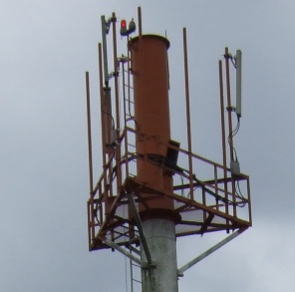
A broad survey of wireless communications, including fundamental principles and concepts in RF, antennas, radio propagation, wireless access technologies (CDMA, OFDMA, cellular, wifi, wimax, etc.), network and service architectures, network management and security, plus brief introductions to facilities infrastructure, and agreements, standards, policies and regulations. This course is useful for engineers preparing for the (IEEE WCET) certification exam, but is also useful for engineers wanting a broad technical introduction to the wireless communications practice.
Pre-requisites: knowledge of basic foundations of electrical engineering and communication systems at the undergraduate level.
Length: 1 week (5 days)
The growth of wireless and of the Internet in recent decades has been astounding, and it has transformed the way we live and work. In this course, we survey wireless internet telecommunications, exploring wireless technologies and IP-based technologies, from the perspectives of network and service architectures, mobility management, QoS, security and network management. Examples of crucial protocols will illustrate how functions related to mobility management, QoS, security, etc., are implemented in protocols used in real networks. While the emphasis is on, firstly, wireless cellular networks, and secondly, wireless LANs, other architectures like WiMAX networks and other paradigms like ad hoc networks and mesh networks, will be touched upon.
Pre-requisites: basic knowledge of data networking, especially IP networking
Length: 3 days
The first generation analog wireless cellular systems were an amazing breakthrough that allowed people to have wireless access to personal communications services and thus to enjoy freedom of mobility while communicating. 3 decades later, we have gone through several generations of technology advancements, and the pace of R&D in wireless access shows no sign of slowing down, and has even accelerated. Within the last decade alone, we have seen the emergence of 3G and WLAN, followed by 1xEV-DO, 1xEV-DV, HSPA, Wimax, LTE, etc. In this course, we will survey these technologies in two dimensions, one being specific functions like handoff, power control, error control, etc., and the other being system examples that show how these functions are integrated together in practice. While we would not have time to go into all the details of the systems, important aspects and engineering choices are selected and the rationale explained.
Pre-requisites: basic knowledge of Fourier transforms and signal processing.
Length: 3 days
Online tutorial by our lead instructor, Dr. Wong, on area 3 of IEEE's WCET certification (network and service architectures). Over 3 hours long, this tutorial is offered in conjunction with IEEE Communications Society.
Click here for more details, on IEEE's website. For a list of IEEE Communications Society tutorials, click here
In this course, we discuss the motivations and principles of IPv6, including examples of crucial protocols. The improvements of IPv6 over IPv4, in terms of auto-configuration, mobility support, security, QoS, etc, will be explained. Transition technologies like IPv4/IPv6 dual-stack implementations, various tunneling schemes, etc., will be discussed.
Pre-requisites: basic networking principles, including layering. Some basic knowledge of IPv4 would be helpful.
Length: 3 days
We conduct workshops/classes on LTE, such as the following workshop: 
Length: 1 to 3 days
We partner with the 3G group of companies (3G Wireless and Technology, 3G Infocom Training Sdn. Bhd., and 3G Wireless and Software) for training delivery in Southeast Asia.